In our lives, we face unexpected challenges throughout the course of our lifetime. From unpredictable experiences like losing a loved one or the daily stresses of work, we face a lot of changes and uncertainty. Events like this do not just affect an individual psychologically but can significantly affect the skin, making existing conditions worse.
In this blog, Dr Vedant Ghuse, a trusted dermatologist in Ghatkopar, explains how stress can affect your skin health.
The system of the human body is intricately designed to combat perceived threats. The immune system is the perfect example of protecting our body by fighting harmful foreign invaders like viruses, parasites, fungi, and bacteria. However, sometimes our body overreacts to the threats that are usually harmless. One of the main contributing factors to the overreaction of the body is stress that results in unwanted skin changes.
The biggest nemesis of our skin is cortisol- a stress hormone that is released when our body or mind are distressed due to real or unreal threat. The body naturally tries to fight the stress hormone by activating the receptors that leads to skin changes, such as:
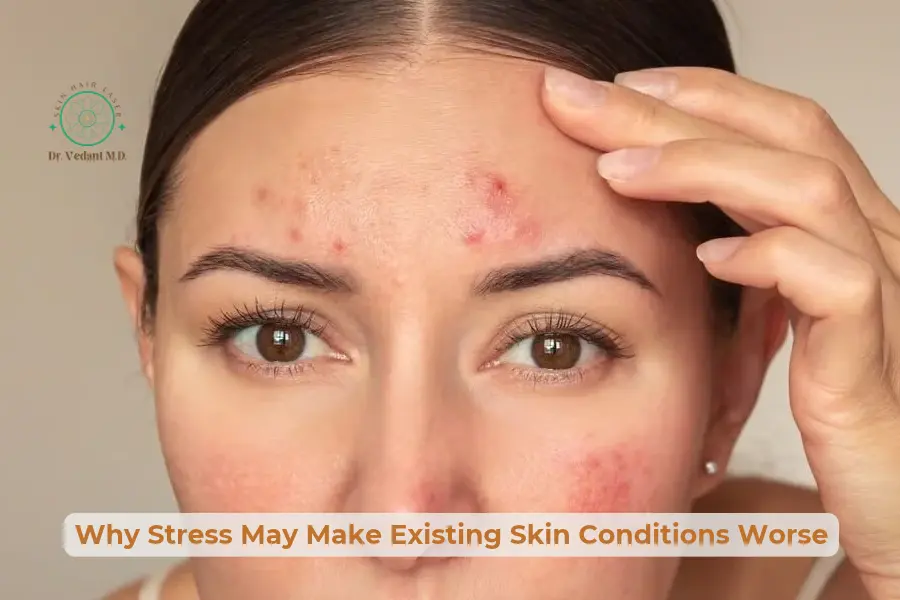
Dr Vedant Ghuse, an experienced dermatologist near me for skin highlights that stress doesn’t only lead to skin changes and inflammation, but can specifically exacerbate certain skin conditions such as:
Stress not only causes changes in our body and brain chemistry, but also greatly influences our behaviours. For instance, some people often touch their face when they are stressed, contaminating the facial area which may worsen acne.
Moreover, when under tremendous stress, people tend to ignore their healthy habits. Certain factors such as ignoring their health by indulging in unhealthy diets, sleeping less, skipping exercises, and ignoring skin health can impact your skin negatively.
Stress is something you can actively deal with effectively; however, the first step is to accept it which may ultimately help in reducing the stress levels.
If it gets difficult to manage stress and your skin condition continues to worsen, please consult an expert like a behavioural therapist or a specialist like Dr Vedant Ghuse, the best skin and hair specialist near me who can help regulate your stress levels and effectively manage your skin conditions.
If you are under stress, seek help today!