
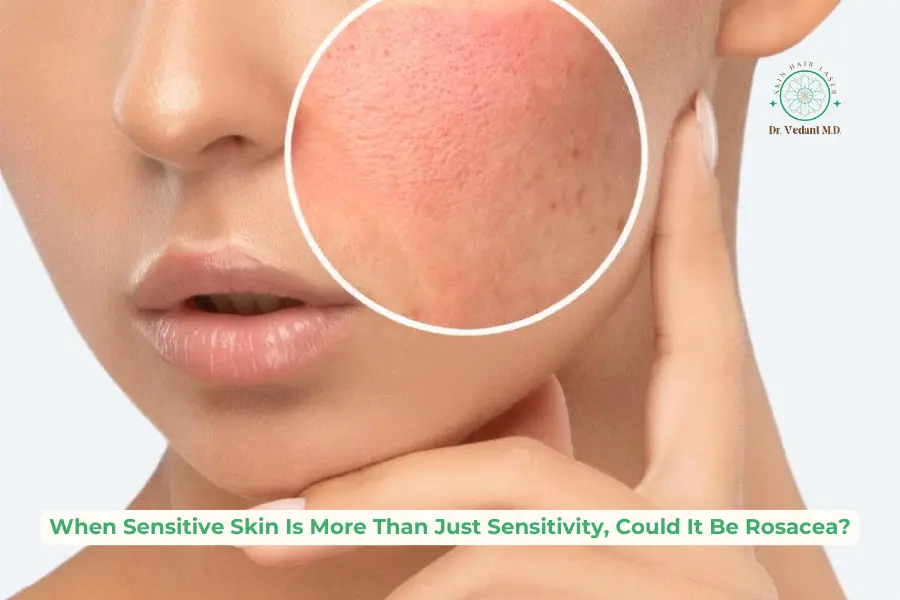
People with sensitive skin often explain it in ways such as, it hurts when they put new products on it, gets red after being cleaned, or reacts to weather changes. But what if the term sensitivity means something more serious than just a normal reaction? What if the symptoms of irritation, redness, and pain are signs of a recurring skin issue and not just reactive skin?
According to Dr Ghuse, a trusted skin specialist doctor near me, the most common issue confused with sensitivity is rosacea, a long-term inflammatory skin condition that affects millions of people all over the world. Rosacea symptoms look the same as common sensitive skin, and many people continue to struggle with underdiagnosed rosacea for many years before seeking treatment.
Distinguishing between the two conditions is crucial to determine how to treat and manage your discomfort and what level of confidence you can expect to achieve.
Sensitive skin tends to be reactive and will flare up in reaction to:
This type of response usually resolves once the cause of sensitivity is eliminated.
Rosacea is a chronic inflammatory skin condition and not a reaction. Rather, it is an ongoing condition that typically becomes worse without appropriate treatment. As per Dr Ghuse, the top dermatologist near me for skin, symptoms of rosacea include:
A persistent redness lasting for hours a day is the most common indicator of Rosacea, particularly in the area of the nose, cheeks, and chin.
Flushing after drinking something warm, eating spicy foods, or being in daylight is one sign of possible Rosacea.
Unlike typical skin irritation caused by allergens, when Rosacea flares occur, the affected areas will burn or feel warm. It will take time for them to stop being irritated.
Telangiectasia — small broken blood vessels that can be seen under the surface of the skin — is a classic sign of Rosacea.
These pimples look like acne, but they are not similar in texture or develop because of improper skin care.
Everyday items and habits can be triggers for Rosacea, such as:
By paying attention to recurring instances when you have flare-ups, you'll have a better idea of what's triggering the Rosacea you may have.
If you notice frequent, painful, or unpredictable redness and irritation on your skin, please search for a reputed dermatologist near me and consult the expert for early diagnosis. The professional can help prevent further damage to your skin and identify what triggers the redness and irritation, to use the appropriate products for your individual needs, and keep the redness and irritation under control over the long term.
There is no cure for rosacea, but with appropriate care, the number of flare-ups can greatly decrease.
Living with irritated and inflamed skin can be frustrating, and it's better to have knowledge of any issues than to be left guessing what could be wrong! What may look like sensitivity may actually be rosacea, so knowing your skin's true needs can lead to a way to calm and protect your skin.