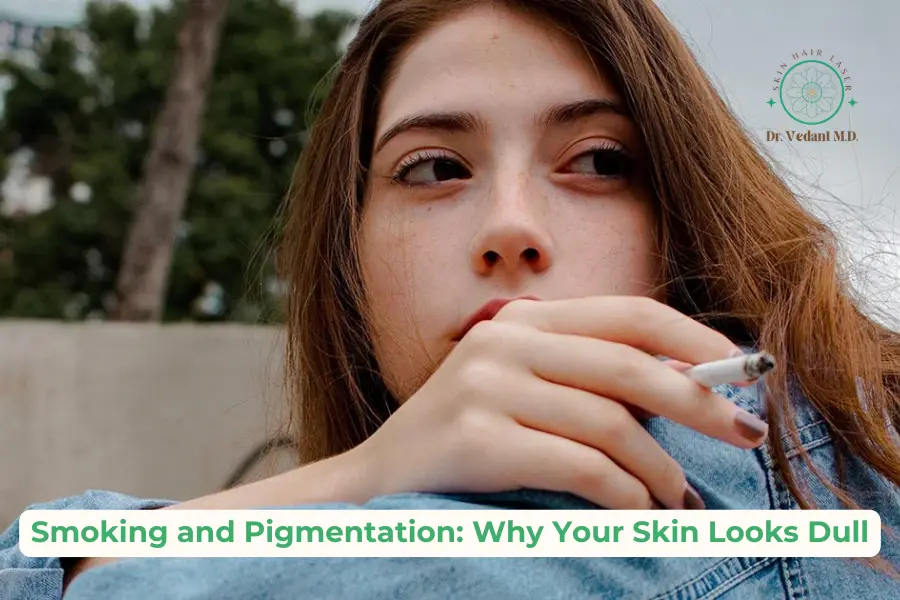
It's common knowledge that smoking causes a number of serious internal health problems, including heart disease, decreased lung capacity, and lower life expectancy than a non-smoker. However, before the development of any of these internal health problems, your skin serves as a visible indicator of damage caused by smoking. When you see that your complexion is looking "grey," pale/yellowish, or discolored with dark spots (in some cases), you are not imagining it.
In this blog, Dr. Vedant Ghuse, a trusted skin specialist doctor near me, discusses how smoking affects your skin's pigmentation and emphasizes that even the most expensive skin care products will never produce the same results as quitting smoking.
The act of smoking causes blood vessels to constrict; as a result, vasoconstriction prevents the delivery of oxygen and nutrients (especially Vitamin A) to the outer layers of your skin. Due to lower oxygen levels, the skin will no longer have a natural, healthy red glow and will instead appear grey (or ashy/dull). The grey (ashy) colour you see on the skin is not due to dirt; rather, it is due to decreased cellular activity in your skin.
The body's main protection from hyperpigmentation comes in the form of Vitamin C. Vitamin C inhibits the activity of tyrosinase, the enzyme responsible for the production of true melanin.
Another item that is a true "vitamin thief" is the cigarette. A single cigarette causes your body to lose a sizable amount of Vitamin C. The loss of your body’s antioxidant shield creates a risk for you to develop hyperpigmentation and uneven skin tone. This can result in dark spots and "smoker’s melasma," which are very difficult to treat purely with topical creams.
In addition to the 4,000+ chemicals in tobacco smoke that land on our skin, these chemicals also stimulate matrix metalloproteinases (MMPs) to produce the enzymes that act like "little scissors" and cut our collagen and elastin fibers apart.
As the structural support of collagen and elastin is destroyed, the skin's structure begins to thin and become more transparent, resulting in an increased ability to see hyperpigmentation as well as broken capillaries underneath the skin’s surface. The result is a mottled, spotty appearance that defines premature aging.
Smoking inundates the body with free radicals and causes stress to the body due to the damage free radicals do to skin cells, as well as other tissues. According to Dr Ghuse, the top dermatologist doctor near me, while the stress on the body is terrible to begin with, this type of stress results in chronic inflammation in the skin. Chronic inflammation in the skin is a direct trigger to activate melanocytes (pigment-producing cells), which causes excessive production of pigmentation around the mouth and eyes and is often called "smoker’s melasma."
Although the damage caused by the act of smoking will usually heal itself, redistributing oxygen to the area will improve circulation and oxygen supply, and an immediate improvement in looks will begin. Depending on the severity of the effects of smoking on one's skin and the amounts and length of use of cigarettes, it may take a long time before full recovery occurs.
Once a person has quit using cigarettes, they can begin using many different types of treatments, including Nd:YAG lasers, chemical peels, and Vitamin C infusions, to "reset" the damaged skin to appear more normal. However, it is important that once someone has quit, they must remove the outside source of the damage (the cigarettes) before the use of these treatments will have the desired effect.
If you feel your skin is losing its vibrancy and you have developed stubborn discoloration from cigarette smoke, we encourage you to speak with Dr. Vedant Ghuse, an experienced dermatologist near me for skin, skilled in providing methods of treating the skin for conditions related to smoking and for restoring a healthy, vibrant appearance to the skin.