
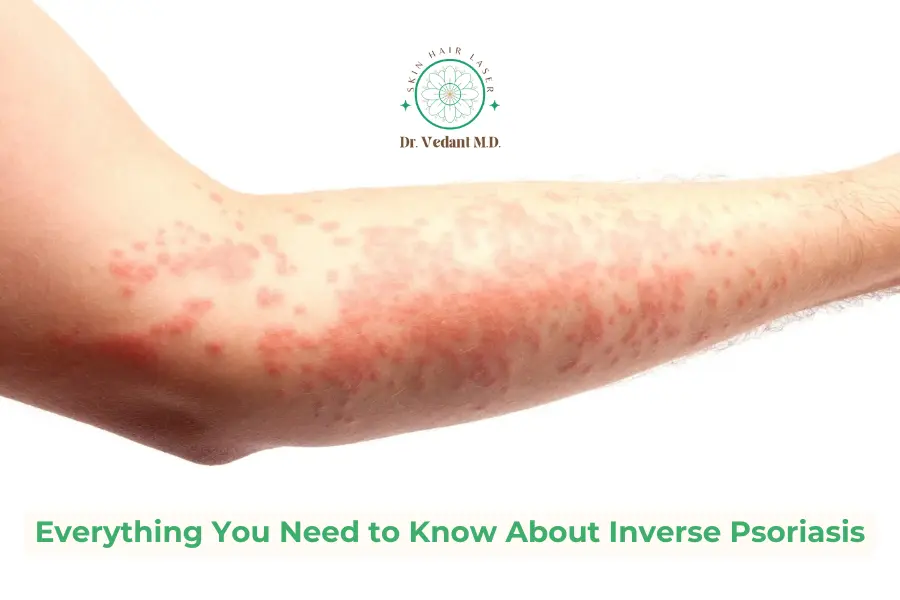
Psoriasis is a long-term autoimmune skin disorder that results in inflammation and rapid growth of skin cells, creating patches of red, scaly, and/or itchy skin. Most people will be aware of common plaque psoriasis, but there is another type called inverse psoriasis that goes largely unnoticed and misunderstood. This type of psoriasis develops in the body’s folds, or creases, making it particularly uncomfortable and harder to control.
In this blog, Dr Vedant Ghuse, a trusted dermatologist doctor near me, explains inverse psoriasis in detail and everything you should know about it.
Inverse psoriasis, also referred to as flexural psoriasis, is a type of psoriasis that forms in areas where skin touches skin, such as beneath the breasts, in the groin, armpits, behind the knees, and between the buttocks. Unlike plaque psoriasis that produces raised, thick, and scaly patches, inverse psoriasis is smooth, shiny, and red, and generally doesn’t have much scaling.
This condition is often aggravated by moisture, heat, and friction. Because it is often located in sensitive areas, it can be very painful; many individuals also find it emotionally challenging due to the area of the body affected.
The symptoms of inverse psoriasis can differ from person to person, but usually include the following:
Inverse psoriasis occurs in warm, moist folds of the body, and can often be mistaken for another skin condition, such as a yeast infection, intertrigo, or eczema. Therefore, an accurate diagnosis from a dermatologist is crucial.
Like other forms of psoriasis, inverse psoriasis is an autoimmune disease. The immune system is overstimulated and causing more skin cell production, which leads to inflammation and redness. Genetics play a prominent role, but the environment can also trigger flare-ups.
According to Dr Vedant Ghuse, the best skin specialist near me, the most common triggers include:
Inverse psoriasis can be mistaken for a yeast or fungal infection, which can result in misdiagnosis. A dermatologist can typically confirm inverse psoriasis with an examination or in some cases, with a skin biopsy. An accurate diagnosis is essential because fungal infection treatments differ from psoriasis treatments, and selecting the incorrect treatment can exacerbate your symptoms.
Although there is no cure for psoriasis, multiple treatment options can help manage and reduce inverse psoriasis flare-ups.
Managing inverse psoriasis is more than just managing symptoms; it is also about the health of your skin and preventing infrequent flare-ups. Regular dermatologist appointments, stress management, and healthy lifestyle habits can help you maintain your disease. Support groups and counselling offer support to help cope with the emotional component of the disease.
For the most part, inverse psoriasis may be with you for life, but if you take proper care, with the right knowledge and treatment, the disease is manageable. The keys to managing this often-ignored form of psoriasis are knowing your triggers, following your treatment, and consistently taking care of your skin. Search for the best dermatology clinic near me and visit a trusted specialist like Dr Vedant Ghuse and learn to manage your inverse psoriasis effectively.