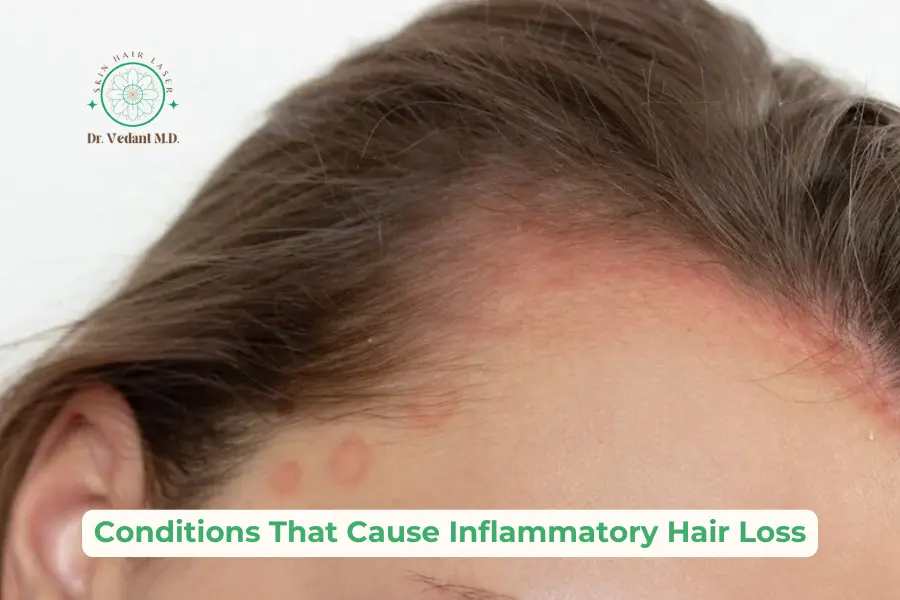
Hair loss can be quite stressful, but it's important to note that different types of hair loss occur for different reasons. For example, some forms of hair loss are attributed to genetics or hormone changes, while other cases are due to inflammatory conditions that attack the scalp. According to Dr Vedant Ghuse, the top hair specialist doctor in Chembur, inflammatory forms of hair loss occur when the body's immune response, or outside factors, create inflammation that damages hair follicles. Without early diagnosis or treatment, inflammatory forms of hair loss can become progressive and/or permanent.
Understanding the various ways that an individual can develop inflammatory hair loss is essential to identifying those who have this form of hair loss early in the process, providing prompt treatment, maintaining a healthy and long-term relationship with your scalp, and protecting against further hair loss.
Alopecia areata is one of the most commonly recognised inflammatory types of hair loss. It is an autoimmune disorder in which a person's immune system mistakenly attacks the hair follicles, resulting in:
In many instances, while the body's immune system attacks the hair follicles, the hair follicles are still alive and can produce hair again. If caught on time, early treatment will improve the likelihood of a successful outcome.
Lichen Planopilaris (LPP) is a long-term inflammatory condition that is the most common cause of scarring alopecia. A person suffering from LPP may experience the following symptoms:
Because LPP can result in permanent hair loss if left untreated. It is essential to search for a hair specialist doctor near me and visit the specialist for an early diagnosis.
Folliculitis Decalvans is caused by a long-lasting infection caused by bacteria, which causes an infection in the hair follicles (hair follicles are small tubes in the skin that contain hair). It may show up as:
DLE is an autoimmune condition categorised under cutaneous lupus. Discoid lupus affects both the skin (especially the scalp) and causes:
As a result of the autoimmune reaction, inflammatory damage occurs deep within the hair follicles, leading to the requirement for early treatment.
Although Seborrheic Dermatitis does not typically cause scarring, chronic inflammation from this common condition can advance thinning/dryness/Irritation to the hair follicles, resulting in loss of hair volume. Symptoms include:
If left untreated, the continued stress on the follicles from inflammation will lead to increased shedding.
Psoriasis of the scalp is characterised by the development of thick, scaly plaques and ongoing inflammation of the scalp. Although scalp psoriasis doesn't usually lead to scarring of your scalp and hair follicles, it can cause a significant amount of shedding. Symptoms of psoriasis of the scalp may include:
Continued scratching of the scalp may also cause additional damage to hair follicles and an increased amount of breakage of treated hair.
Tinea capitis is an infection caused by a fungus that can affect both adults and children. Tinea capitis is characterised by:
The fungal infection produces inflammation of the hair follicle and requires antifungal therapy for successful treatment.
Inflammatory hair loss is more than an aesthetic concern. It is a medical condition that needs prompt and appropriate evaluation and treatment. Most inflammatory scalp conditions, if not diagnosed in a timely manner and treated appropriately, may result in permanent damage to the hair follicle, but early diagnosis and appropriate treatment are likely to improve recovery.
If you have itching, redness, patchy hair loss, or discomfort on your scalp that persists, please search for a trusted dermatologist doctor near me, and visit the specialist to identify the underlying cause and maintain the health of your hair in the long term.