
Quick Summary:
The monsoon season brings cold showers, relief from the prickly heat, and the perfect climate for sipping a hot cup of chai and enjoying some pakodas. But it also creates an environment in which fungal infections thrive, making it a season when patients flood dermatology clinics.
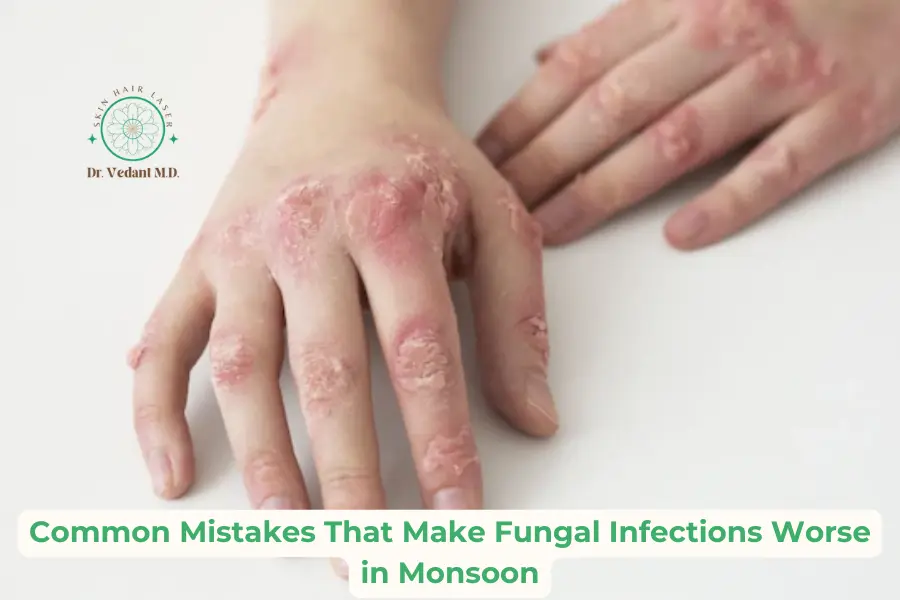
Some of the common complaints that patients visit our skin clinic in Chembur for during monsoon season include persistent itching, circular red patches, peeling or cracking skin, and small, discoloured patches. These symptoms indicate the presence of fungi, which can worsen due to common, inadvertent mistakes.
This blog covers essential information about fungal infections, along with common mistakes you should avoid to prevent them from worsening.
A fungal infection occurs when fungi overgrow in a favourable environment or exploit a weakened immune response, allowing them to multiply. They naturally exist in the environment, but humid, moist conditions give them the perfect opportunity to thrive and cause an infection.
Common Fungal Infections in the Monsoon
Symptoms of Fungal Infections
There are some commonly made mistakes by patients that Dr Vedant Ghuse, an experienced skin specialist doctor near me notices while treating fungal infections during the monsoon season:
Soaked clothes or footwear keep the skin damp, making it the ideal breeding ground for bacteria and fungi. Damp items like clothes, socks, or shoes irritate sensitive skin and encourage faster spread of infection.
Once the itching improves, many people stop using anti-fungal creams without realising the consequences. Stopping treatment early halts recovery, doesn’t end fungal growth, increases the frequency of recurring infections, and complicates the fungal situation.
Over-the-counter steroid creams can temporarily reduce redness. However, in reality, it masks the symptoms and causes the fungus to spread deeper. In the absence of superficial symptoms, diagnosis gets delayed, and the condition gets more complicated.
Red patches, persistent itching, and spreading rashes are warning signs that require medical intervention. Delaying medical consultation can cause the infection to spread to larger areas, may infect family members, and may prolong the treatment period.
One of the first things professionals recommend when a patient is diagnosed with a fungal infection is to use separate personal items, such as clothing, towels, and grooming items, to avoid contamination.
The one factor which can be most helpful is keeping your skin dry. Along with that, following these tips will make a great difference:
Clothing and Footwear
Personal Hygiene
Care of Skin During Monsoon
Some mistakes are made unintentionally; however, they can prove to be dangerous for issues like fungal infections. Hence, it is essential to not just get the right treatment, but to gain knowledge and spread awareness about the necessary steps to prevent fungal infections. Consult Dr Vedant Ghuse, a trusted dermatologist in Ghatkopar and Chembur to learn everything you need to know about fungal infections.