Chemical Peels: Benefits, Risks, and Who Should Avoid Them

Chemical Peel|Guide|Skin Specialist in Ghatkopar

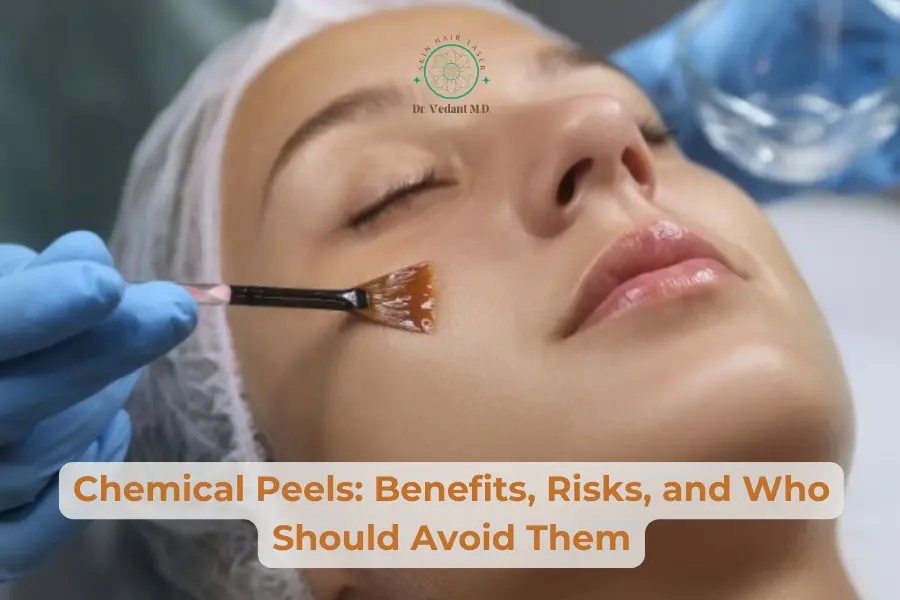
Chemical peels are very popular types of cosmetic skin treatments that enhance skin texture, minimise pigmentation, and provide a brighter complexion. They are accomplished by placing a chemical solution on the skin. The solution exfoliates the damaged layers of skin and reveals the new skin lying beneath. Chemical peels provide very noticeable results, and it is important to understand not only the benefits of chemical peel treatments but also the risks involved before choosing this treatment option.

In this blog, Dr Vedant Ghuse, a leading dermatologist near me for skin explains the benefits, risks, and everything you need to know about chemical peels.

Benefits of Chemical Peels

Chemical peels are commonly performed as they can be effective at treating multiple skincare issues at once. Some main benefits of chemical peels include:

  • Improved skin texture: Chemical peels help remove dead skin cells, resulting in a softer and smoother complexion.
  • Reduced acne and acne scarring: Chemical peels can unclog pores and lessen the appearance of post-acne scarring.
  • Brighter skin complexion: Chemical peels can help reduce dullness and an uneven skin tone by reducing tanning and pigmentation.
  • Reduced fine wrinkles and lines: Chemical peels help stimulate collagen production, resulting in the appearance of more youthful skin.
  • Control of excess oil: Chemical peels are effective in the treatment of oily and acne-prone skin.
  • Reduced sun damage: Chemical peels assist in fading sun spots and lightening of mild discolouration caused by sun exposure.
  • Increased absorption of skincare products: Skin that has just been exfoliated by a chemical peel tends to absorb serums and creams much better than skin that has not been exfoliated.

Depending on the skincare concern, dermatologists like Dr Vedant Ghuse, the best skin and hair specialist near me, may recommend superficial, medium, or deep peels using chemical exfoliants such as glycolic acid, salicylic acid, lactic acid, or other acids.

Risks and Side Effects of Chemical Peels

Chemical peels offer many benefits, including exfoliation and increased collagen production, but they also carry some risks.

Common risks following a chemical peel are
  • Mild redness and irritation
  • Peeling and drying of the skin
  • Temporary sensitivity to your skin
  • Mild swelling or itching
  • Mild burning sensation
Possible Risks
  • Hyperpigmentation from the use of stronger products resulting in darker spots on the skin.
  • Scarring from deeper chemical peels on deeper tissue than superficial tissue
  • Infection from the chemical used during the peel process
  • Extreme sensitivity to sunlight following the peel procedure.

After the peel has been performed, your skin will be more vulnerable to UV damage, therefore, it is very important to use sunscreen afterwards. If you do not take care of your skin after the peel, you may experience pigmentation and delayed healing.

People should be aware that chemical peels are not right for everyone. There are also certain skin conditions and medical factors that put people at an increased risk of complications with chemical peel treatment.

Do Not Get Chemical Peels if You Have:

  • Active skin infections or cold sores
  • Severe acne with open wounds
  • Eczema, psoriasis or rosacea that is currently flared up
  • Extremely sensitive skin
  • Underwent facial surgery or laser treatment within the last 2 months
  • Have a history of keloid scarring.
  • Consult Your Dermatologist if You:
  • Have darker skin with a tendency for hyperpigmentation
  • Are currently pregnant or breastfeeding
  • Using any type of medication for acne
  • Have chronic skin allergies

Safety Tips for Receiving Chemical Peels

To achieve maximum results from a chemical peel, it is important to adhere to these safety precautions:

  • Choose a qualified dermatologist or licensed skin care professional for your chemical peel.
  • Avoid direct sunlight before & after your treatment.
  • Use mild skin care products during the healing process
  • Use a broad-spectrum sunscreen daily.
  • Do not manually pick, peel, scratch, etc., any areas of flaking skin.
  • Stay hydrated & keep your skin well-moisturised.

Chemical peels can greatly enhance one’s appearance when done appropriately and in a safe manner. They can effectively treat acne scars, pigmentation, dullness, and signs of ageing that typically occur with age. However, it is imperative to understand the possible side effects of getting a chemical peel as well as whether or not your skin is suited for this type of treatment before you receive it.

Search for the best dermatologist near me like Dr Vedant Ghuse, and consult the expert regarding whether or not you may be a candidate for a chemical peel will determine how best to achieve your goals.